
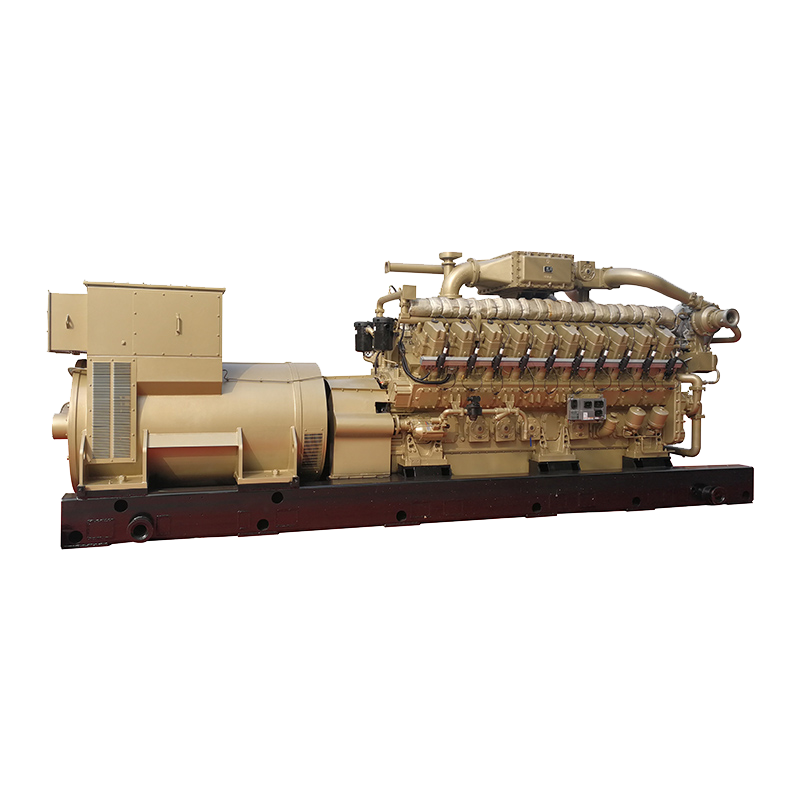
The diesel engines on a drilling rig run for long hours at high load, often far from any service workshop. Choosing the wrong engine means lost drilling time, high fuel bills or an engine that is overloaded from day one. This guide explains the main decisions, using the Jichai 190, 175 and 200 series engines we supply as examples.
1. Mechanical or electric drive rig?
On a mechanical drive rig, the engines drive the drawworks, rotary table and mud pumps through torque converters or couplings and a compound transmission. The engine is sized for its direct mechanical load. On an electric drive rig, the engines drive generators, and the rig equipment runs on electric motors. Here the engine is chosen as part of a generator set, with voltage and frequency to match the rig’s electrical system.
2. Match the engine to drilling depth
Drilling depth drives the power the rig needs. Among the engines we supply:
- 3000 series (810–1,235 kW): designed for mechanical and electric rigs from 4,000 m to 7,000 m
- 175 series (1,370–1,766 kW): designed for electric drive rigs from 4,000 m up to 12,000 m, with EPA Tier 2 emissions
- 4000 series (1,200–1,300 kW): a long-stroke engine for mechanical drilling rigs
- 2000 series (560–1,000 kW): for driving rigs or mud pumps with a torque converter or coupler
Most rigs use several engines together, so total rig power is divided across two, three or more units.
3. Check continuous power, not only standby
Datasheets often list two ratings. For example, the H16V190ZL has 2,180 kW normal power and 2,400 kW standby power. Drilling is continuous duty, so size the engine on its normal (continuous) rating and keep a margin for peak loads. See our guide to standby vs normal power.
4. Choose the speed
Many 190 series models come in several speed versions. The A12V190ZL, for example, gives 1,080 kW at 1500 r/min and 810 kW at 1000 r/min. Lower speed gives longer life and lower wear, while higher speed gives more power from the same engine. For generator sets, speed also sets the frequency: 1500 r/min suits 50 Hz and 1200 r/min suits 60 Hz with the matching generator.
5. Plan the drive arrangement
On mechanical rigs, the engine is usually delivered with a coupling or torque converter. The 2000 series YOZJ750 hydraulic coupling gear reducer mounts directly on the engine flywheel housing, covers 600–1,300 kW with 96% or higher efficiency, and is standard equipment on oil drilling rigs. See coupling gearbox sets.
6. Consider fuel, emissions and site conditions
- Fuel consumption ranges from 198 g/kWh on the 175 series to about 209 g/kWh on the 2000 series. Over thousands of hours this difference adds up.
- Check the emission rules in the country of operation. The 175 series meets EPA Tier 2.
- Confirm cooling, starting method (air or electric) and the space available on the rig floor.
What to send us
Tell us the rig type, drilling depth, number of engines, required power and speed, and whether you need bare engines, coupling sets or generator sets. Our RFQ guide has the full checklist, and our diesel engines page lists every series.
Request a quotation
Tell us your application, required power, speed, fuel, voltage and frequency using our RFQ guide or the contact page. You can also email nora@qdhailong.com or call +86-532-66090318.